Fiddle Leaf Fig Care · Ficus Lyrata
4 Things Quietly Killing Your Fiddle Leaf Fig (and the One Fix Most Owners Miss)
If you typed "is my fiddle dying?" into your phone at 11pm, you're in good company. It's one of the most-Googled houseplant panics there is, and almost every fiddle leaf fig owner gets there eventually. The brown spots showed up out of nowhere. A leaf or two dropped onto the floor. The plant that looked so lush at the shop now just sits there, doing nothing, for weeks.
We hear the same sentence from customers constantly: "I was about ready to give up on it." Before you do, read this. A fiddle that looks like it's failing is usually a fiddle that's stressed and underfed, not a fiddle that's beyond saving. Below are the four things that quietly do the most damage, in roughly the order they happen, and the small changes that turn each one around.
One honest note before we start. Good food is the nutrition layer of a recovery, not a magic cure. It works alongside decent light and sensible watering. We'll be specific about what it can and can't do.
1. Inconsistent watering
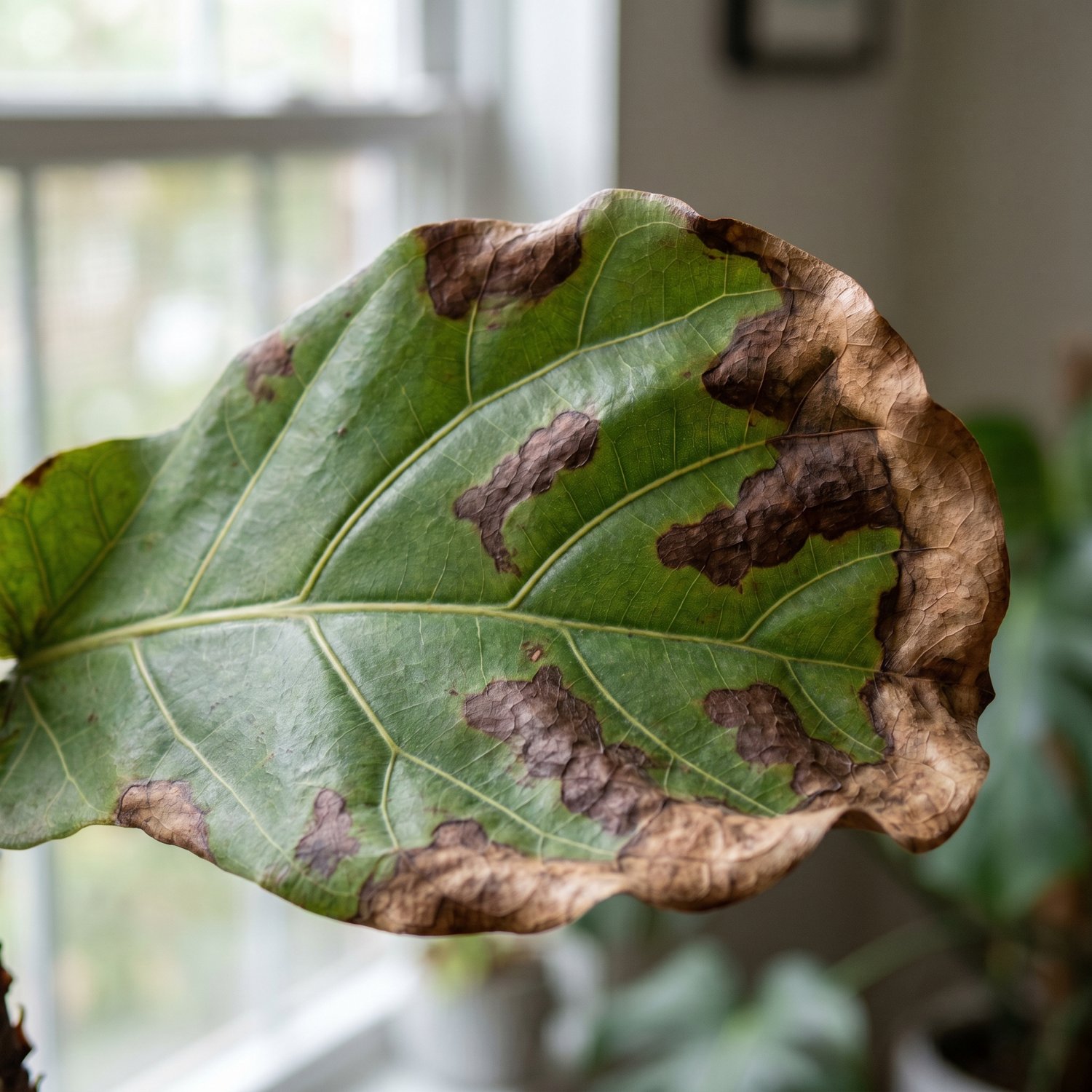
This is the one that gets blamed for everything, and it really is behind a lot of the brown spots people panic over. The trick is that fiddles brown in two opposite directions, and the pattern tells you which mistake you've been making.
Dark brown or black spots that start at the base of the leaf, near the stem, usually mean too much water sitting around the roots. The roots stay soggy, they start to suffer, and that damage shows up at the bottom of the leaves first. Brown that starts at the edges and creeps inward, with the leaf going crispy and dry, points the other way: the plant has been too dry for too long. Same symptom word, "brown spots," two different causes.
The fix isn't a rigid schedule. It's a rhythm. Wait until the top inch or two of soil is dry, water thoroughly until it drains out the bottom, then leave it alone until it's ready again. A fiddle in steady light with steady watering stops swinging between extremes, and the new leaves come in clean. If you're not sure which problem you have, our 30-second diagnosis quiz walks you through the exact symptom you're seeing.
2. The wrong food
Here's the quiet one, the mistake almost nobody talks about. You feed your fiddle the same all-purpose bottle you use on everything else, usually something balanced like 10-10-10, and you assume you've checked the "feeding" box. You technically have. You've just fed it the wrong thing.
A balanced food gives equal parts nitrogen, phosphorus, and potassium. Phosphorus mostly drives flowers and roots. A fiddle leaf fig doesn't flower indoors and it's built almost entirely of leaf with a relatively small root system, so a balanced food over-supplies phosphorus it can't really use and under-supplies the steady nitrogen it lives on. That's why we formulate ours at 3-1-2: more nitrogen for green, leafy growth, and far less phosphorus, matched to what a ficus actually wants.
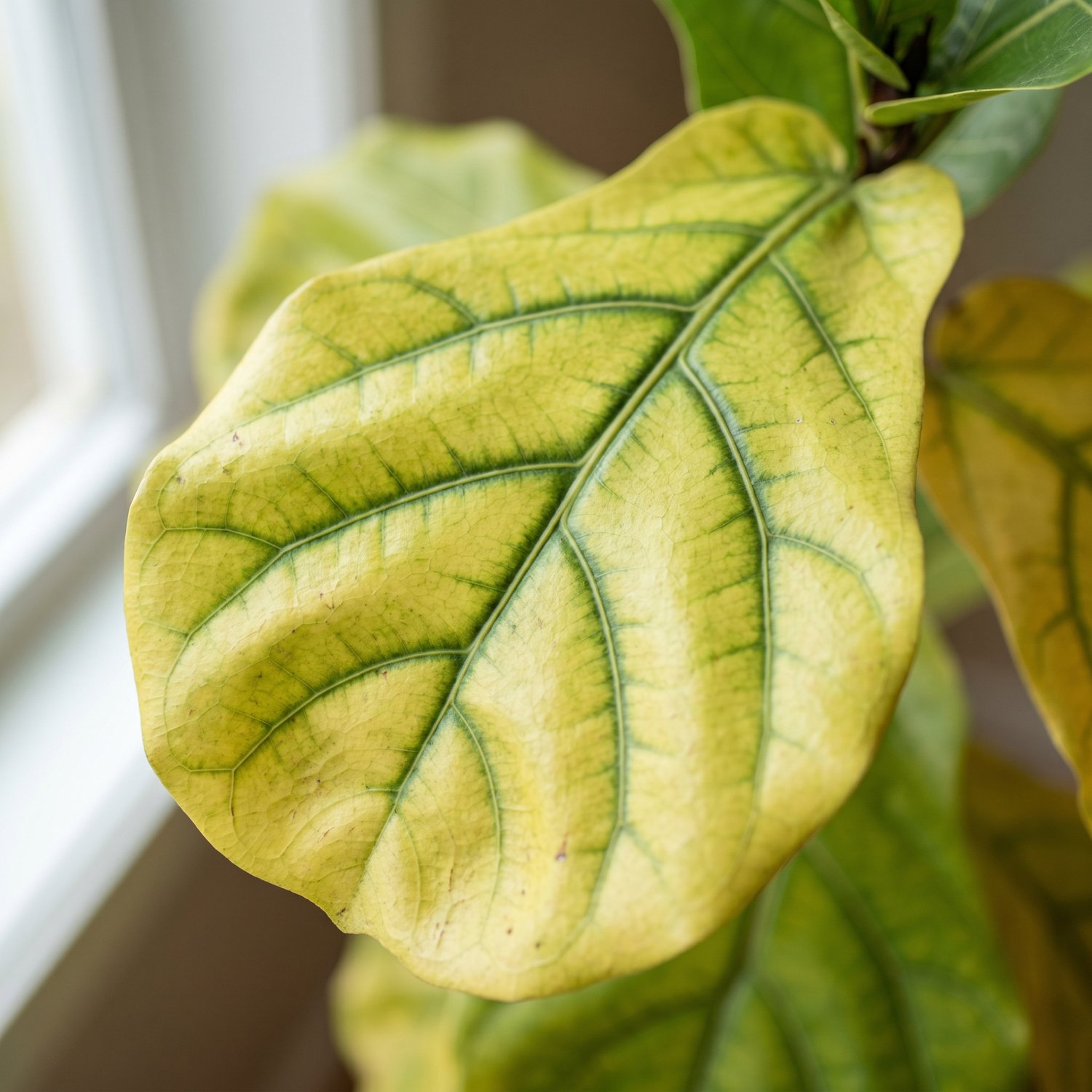
The wrong-food problem has a second face: yellowing. When leaves go pale and yellow but the veins stay green, that's usually a micronutrient lock-out, with iron and manganese the most common culprits. Indoor tap water and pH swings tie those nutrients up so the roots can't reach them. We chelate the iron and manganese in our food specifically so they stay available to the plant, which is the direct answer to that green-veined yellowing.
3. Shock and stress
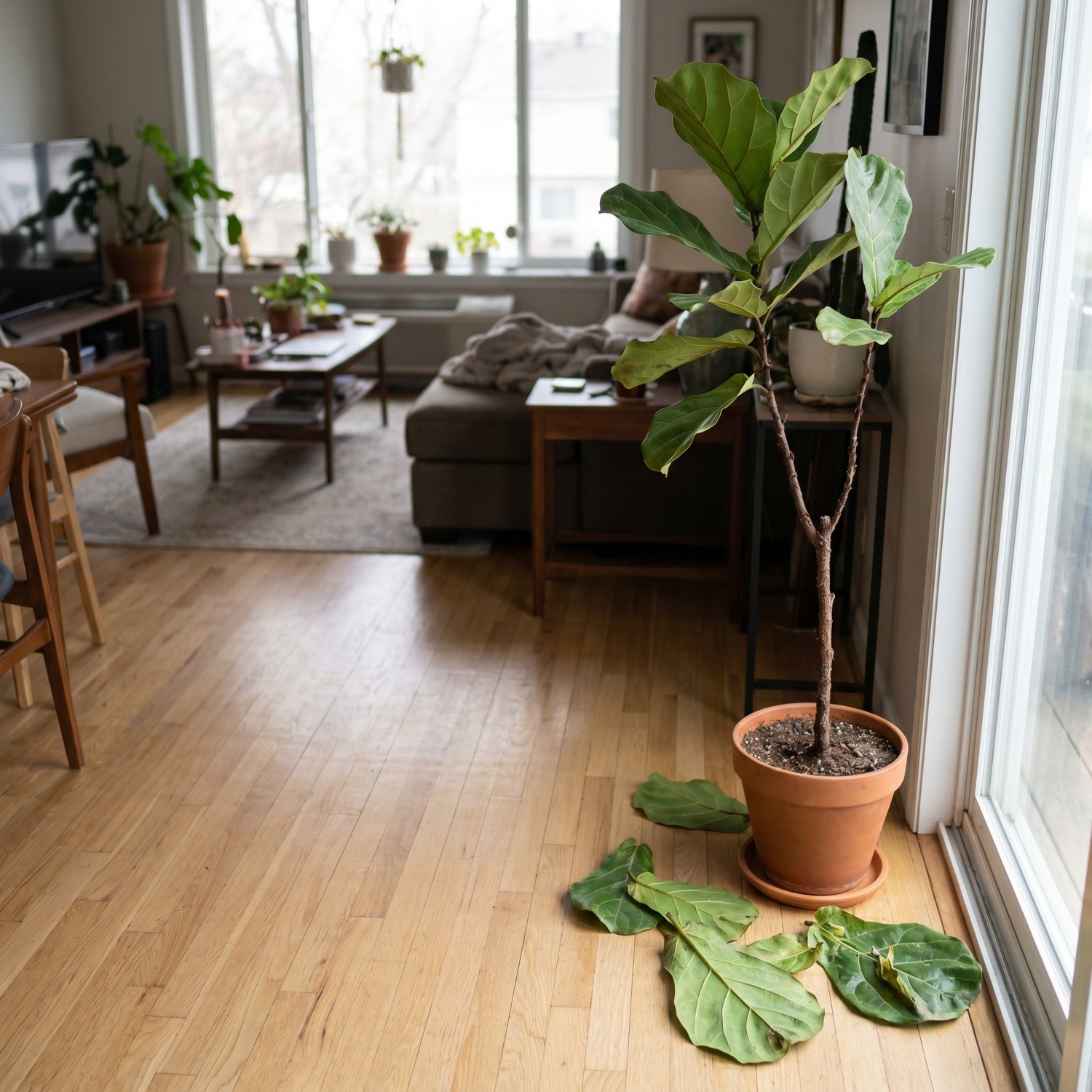
Fiddles are famously dramatic, and stress is where the drama shows up. Move it across the room, set it near a cold draft or a heating vent, or just let the seasons turn from summer into fall, and a fiddle will often answer by dropping leaves. It's not being difficult. A plant that's stressed and underfed will shed what it can't afford to keep alive, the same way you'd cut spending when money gets tight.
You can't always avoid the trigger. Plants get moved, winter arrives, the furnace kicks on. What you can change is whether the plant is well-fed enough to ride it out. A fiddle with steady nutrition in its system holds onto more of its canopy through a stressful stretch, where an underfed one drops leaf after leaf. Food won't stop a draft, but it gives the plant the reserves to weather one.
This is the point where a lot of owners almost give up, so it's worth hearing from one who didn't.
Marisa K. · ★★★★★ · Verified buyer
4. Feeding too hard, too rarely
This last one trips up the owners who are actually trying. You read that your fiddle needs to be fed, so once a month you mix up a strong dose and pour it in. It feels responsible. To the plant, it's a flood followed by a famine.
A big monthly dose dumps a slug of fertilizer salts onto delicate roots all at once, which can scorch them, and then the plant runs lean for the three weeks until the next one. The better approach is the one experienced growers swear by: weakly, weekly. A small, gentle, diluted dose with every watering keeps a steady trickle of nutrition going in, never enough to burn, and it flushes salt buildup instead of letting it pile up. Our food is built to be used exactly this way, one small cap with your watering can.
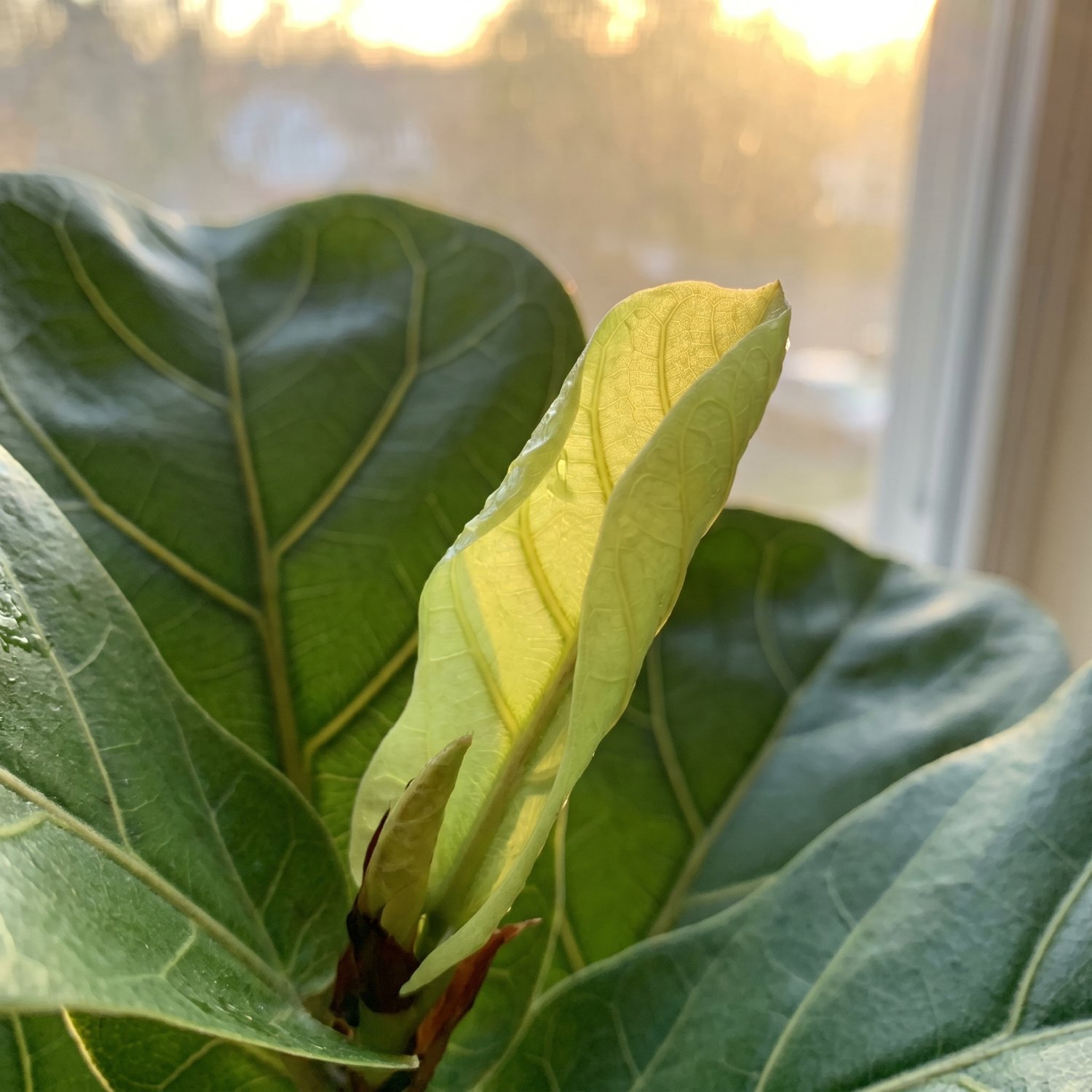
Get these four right together, consistent watering, the right ratio, enough reserves to handle stress, and a gentle steady feed, and most owners see the same thing within a few weeks. The dropping slows, the yellowing fades, and a new leaf finally starts to push. That new leaf is the whole point. It's the moment you stop worrying that you're losing the plant. If you want to skip straight to the food we built for this, here it is.
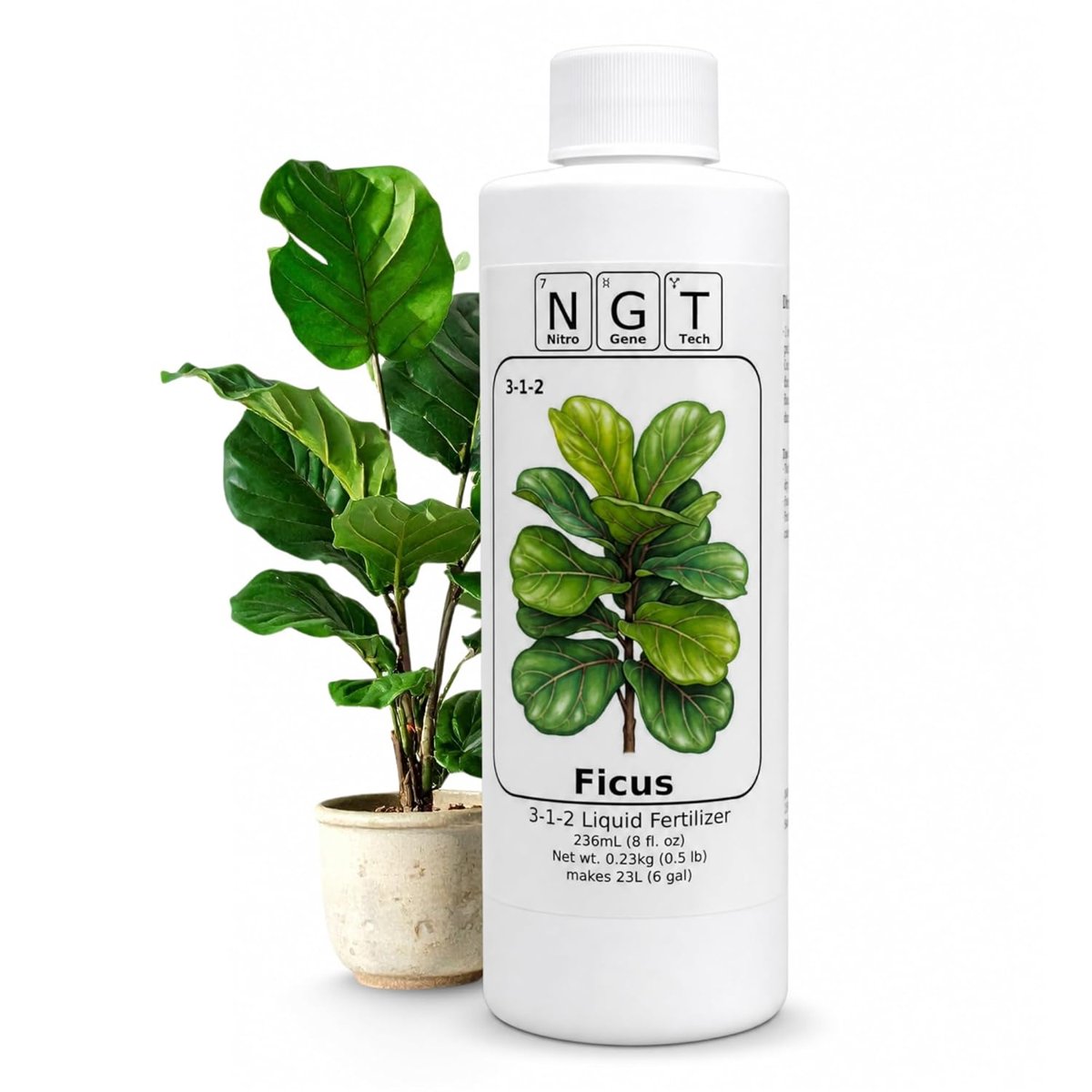
NitroGene Tech Fiddle Leaf Fig Food
A gentle 3-1-2 liquid feed built for ficus lyrata, urea-free and easy on delicate roots, with chelated iron and manganese to answer the yellowing most owners fight. Designed for "weakly, weekly" feeding, one small cap with every watering. The nutrition layer of a fiddle's comeback, backed by our New-Leaf Guarantee.
Bring my fiddle back · from $18Your fiddle is probably not too far gone
Most struggling fiddles aren't dying, they're stressed and hungry for the right thing. Fix the watering rhythm, give it decent light, and feed it gently with what a ficus actually needs. That combination is what turns a sulking plant back into a growing one. We can't promise a miracle, and good food won't cure root rot or save a plant that's truly past the point of no return, but for the everyday struggling fiddle, steady nutrition is the layer most owners are missing.
That's why we stand behind it with our New-Leaf Guarantee: feed your fiddle as directed for 90 days, and if it doesn't push new growth, we'll refund every cent, bottle empty or not.